
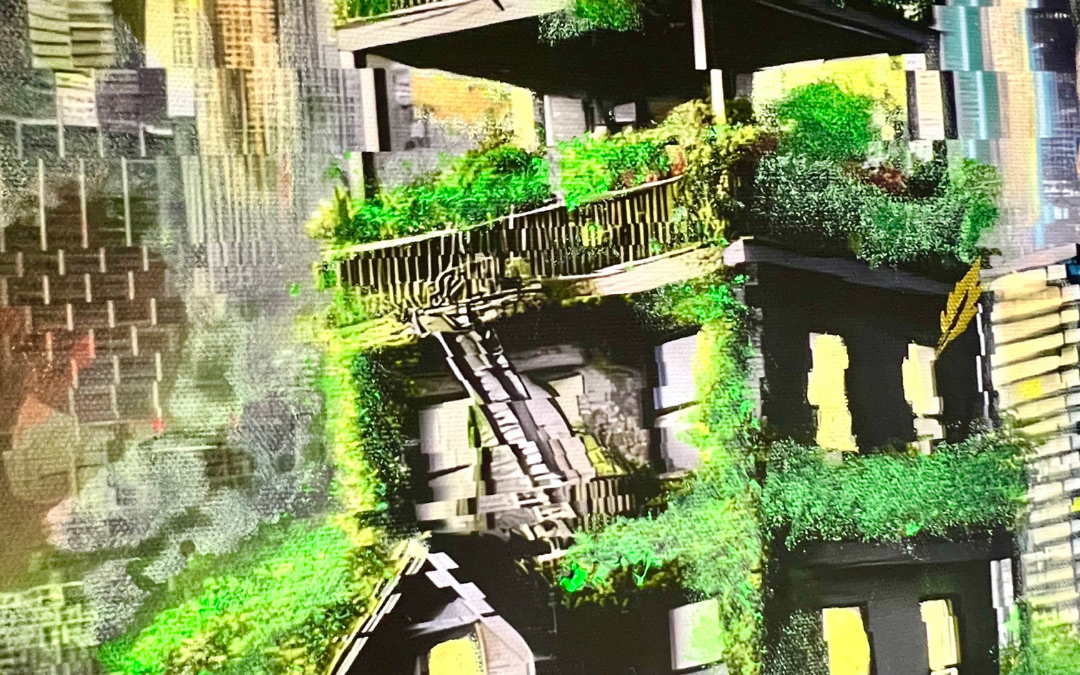
How urban spaces guide our emotions – and we revitalize them
Cities are more than just places. They are dynamic systems that shape our thoughts and emotions – and are shaped by them. The artwork series “Deep Dive – Urban Life” sheds light on this relationship between the urban environment and our inner world:
How does urban design affect our perception? How do architecture, light and spaces reflect our emotions and our urban well-being?
How urban spaces influence our behavior and well-being
Scientific findings show that urban spaces can influence our behavior and our well-being. At the same time, urban design is not a purely technical process. It is also an emotional process: Architects, residents and political decision-makers bring different expectations, values and needs to the table. These perspectives come together in the planning process – sometimes in conflicts, sometimes in creative solutions, sometimes in compromises that shape the everyday lives of many people.
The invisible signals of the city
From dark alleyways to colorful parks
Places send signals. Dark alleyways can symbolize insecurity and exclusion, while open squares and colourful parks can promote relaxation and social exchange. But it’s not just about what the city “does to us”. Our perceptions also have an impact: emotions such as fear, excessive demands or confidence influence how we use spaces, which paths we choose and how we actively shape places – through interaction, use, appropriation or withdrawal.
Designing and experiencing cities
A reciprocal relationship
“Deep Dive – Urban Life” invites you to delve deeper into this web of urban space and the human psyche. The series makes it clear that we are not only influenced by cities – we also help to shape them. Just as we shape our inner world, we also shape the outside: through behavior, decisions, habits and the way we inhabit or avoid spaces.
The visual design of “Deep Dive – Urban Life”
In this series, digital techniques and classical painting merge to express the relationship between the city and people. First, digital structures are created, which are then further built up and deepened by hand using oil. Metallic and neon oil paints set luminous accents – they attract the eye and create a visual “pulse”, similar to the multi-layered life of the city.
Depending on the work, a UV layer is added, which makes additional layers visible under black light. Not as an effect, but as a conscious decision: a second reading that only reveals itself if you allow it to.
Why this is important to me
This technique tells of an interaction: thoughts and emotions shape our view of the city – and at the same time the city shapes our experience of it. It is a constant dialog between structure and impulse, between established systems and new ideas. For me, this relationship also becomes a symbol of how we shape our own thoughts: always searching for a balance between inner turmoil and outer order.
Inspiring sources
-
Lederbogen, F., et al. (2011). City living and urban upbringing affect neural social stress processing in humans.
-
Charité – Universitätsmedizin Berlin: Effects of urban living environments on mental health in adults.
-
Emotional-Health-Oriented Urban Design: A Novel Collaborative Deep Learning Framework for Real-Time Landscape Assessment…
-
Editorial compilation: Dr. Nina Margies – Emotions and the City.

