In short
Our memory is not an archive, but a creative process: it forgets, condenses, distorts – and builds a coherent story from fragments. It is precisely this beauty and fragility that is at the heart of my “Memory Falsification” series.
Memory is not storage
In my art series “Memory Falsification”, I immerse myself in an area that silently combines scientific knowledge and personal experience: Memory.
The more I delve into it, the clearer it becomes: We don’t simply remember “what was”. We remember what our brain makes of it.
What we forget shapes us just as much as what remains
Memory research shows how quickly content fades if it is not repeated or actively anchored. Memory is fleeting – and yet it often feels absolute.
This tension interests me: transience on the one hand, conviction on the other.
In my work, I translate this into layers: Places that are clear – and others that elude, overlap, blur.
Emotion leaves its mark
There are moments that stay with you as if they were burned into your memory: Smells, places, sentences, looks. Emotion can condense and intensify memories – sometimes beautiful, sometimes painful.
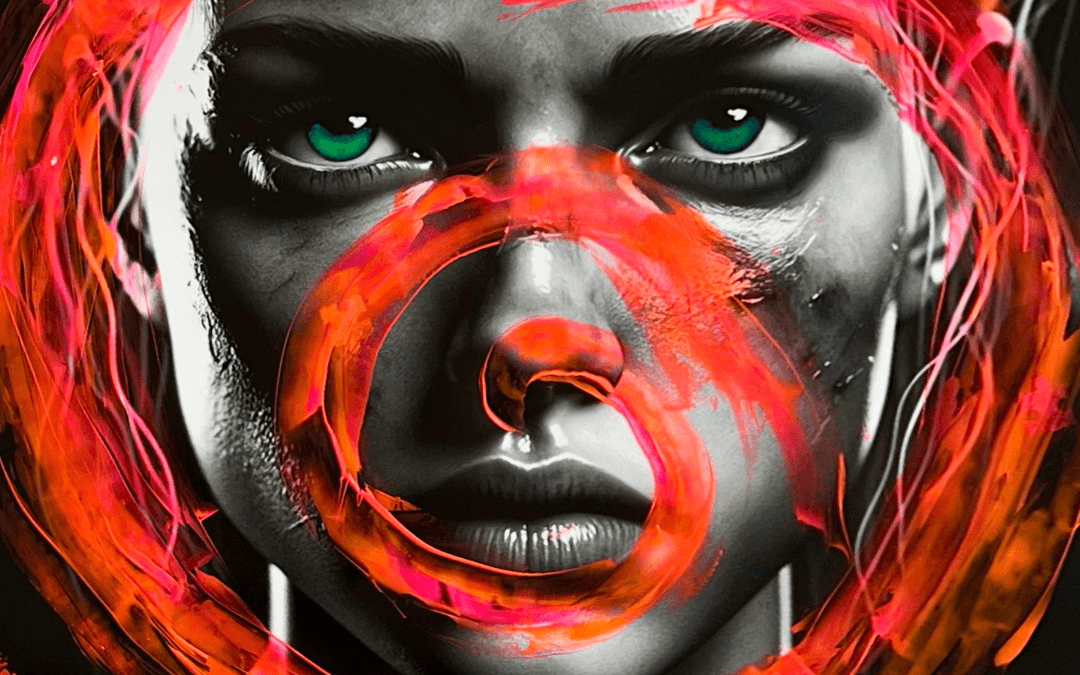
I then work with intense colors, contrasts and dynamic structures to make precisely these “charged” memories visible: not as an illustration, but as a feeling of depth and pressure.
Memory can be influenced
A particularly fascinating point: memory is malleable. It can be changed by language, expectations or later information – and suddenly an experience becomes a different version of the same event.
This fragility is reflected in overlapping forms, “shifted” details and blurred transitions: as an image for the boundary between reality and reconstruction.
What “Memory Falsification” is about for me
This series is a visual exploration of this,
-
how memory is created,
-
how it lets us down,
-
how it transforms,
-
and how it shapes identity.
I invite you to see memory not as a flaw, but as a human quality: a mixture of facts, emotion and the quiet ability to reinvent.
Why only women in this series?
In “Memory Falsification”, women are the main characters – consciously.
Part of this decision is artistic: I wanted to show female presence not as a role, but as a bearer of inner complexity.
Another part is a reaction: AI systems and their visual worlds often reflect social imbalances and stereotypical patterns (especially in older training levels). My series counters this: a clear, consistent perspective that makes the strength, depth and complexity of female narratives visible.
So that we can remember later that we wanted to tell it differently.
Sources
-
Hermann Ebbinghaus (1885): On memory
-
James L. McGaugh (2000): Memory – a century of consolidation
-
Elizabeth F. Loftus & John C. Palmer (1974): Reconstruction of automobile destruction…

