CRACK OF LIGHT
Matter, time and the duality of perception
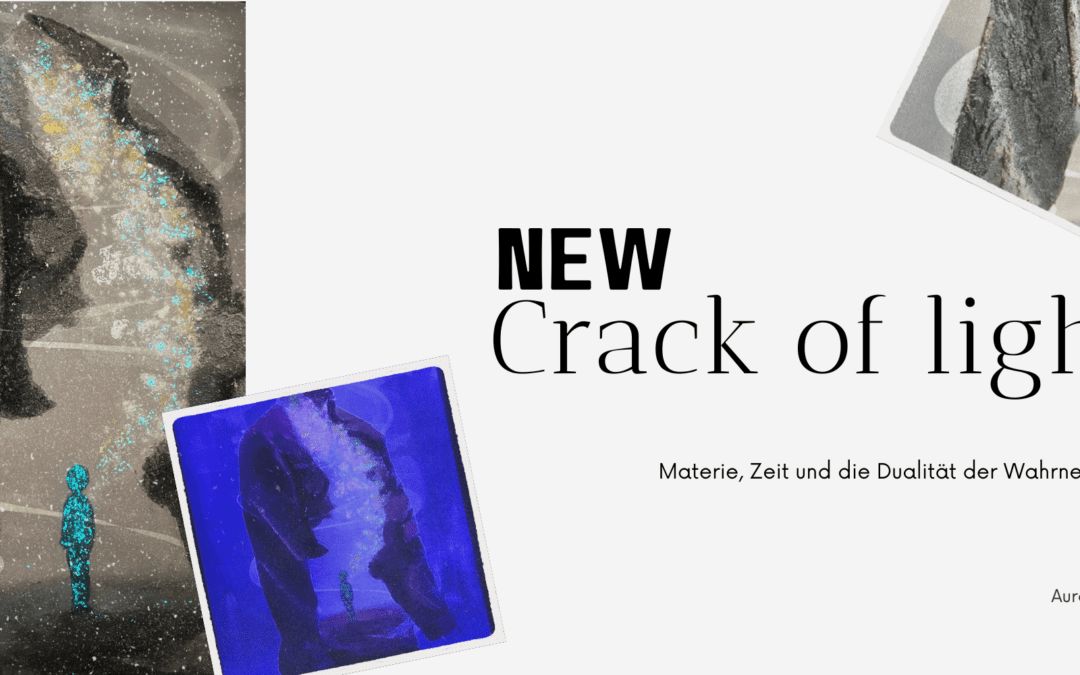
The “Crack of Light” series of works explores the interaction between time, materiality and the durability of the core. The combination of pumice mortar, oil paints and fluorescent pigments creates works that only reveal their full meaning through the changing light conditions.
The process of erosion
The surface of the works – a rough layer of pumice mortar – symbolizes the outer form that changes over time. As in nature or a biography, cracks and fractures do not occur randomly, but as a result of processes, resistance and the effects of time. These defects are not understood here as decay, but as the evolution of the structure. Following the Kintsugi philosophy, the rupture becomes the carrier of a new, more valuable aesthetic.
Essence under the crust
While the outer shell is marked by external influences, an inner layer remains untouched. The series illustrates the duality between this shaped surface and a permanent substance:
-
The outer layer: Represents the form that is drawn, stretched and finally broken by life.
-
The glow (the essence): The pigments symbolize a constant that already exists before the first crack appears. However, it only becomes visible when the shell is deformed.
Transformation of perception
The change of light functions as an analytical tool: in normal light, the haptic matter dominates. In darkness or under black light, the focus shifts. The heavy crust recedes visually and reveals what has survived in secret.
“Crack of Light” is therefore a study of permanence. Are the cracks that time draws on a surface really a sign of destruction? Or are they rather the necessary condition for perceiving an underlying, unchanging essence?

